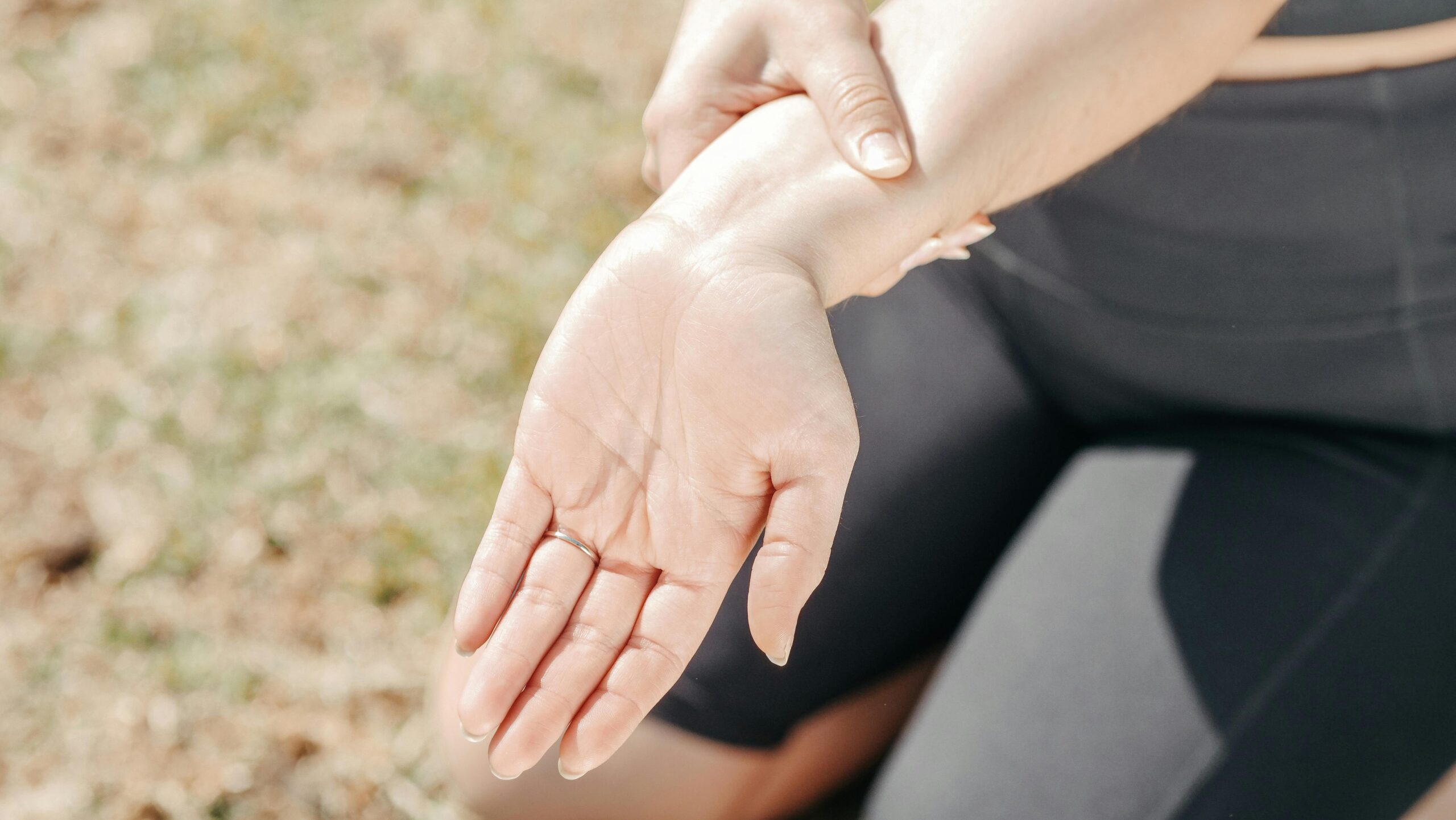
Tendonitis is a common musculoskeletal condition that affects people of all ages and all activity levels. Whether you are someone who spends time in the garden, climbing on a ladder, painting a house, or sitting in front of a computer all week, or whether you’re a skilled athlete, tendon pain can appear out of nowhere and negatively impact daily living. A physical therapist can not only help you recover from tendonitis, but can also help you to understand the nature of tendonitis, why it occurs, and how to prevent it from returning.

Dr. Maggie Robertson helps patients with tendonitis to recover and prevent recurrence.
What is Tendonitis?
Tendonitis refers to the inflammation or irritation of a tendon, the thick tissue that connects muscle to bone. When a tendon is stressed repeatedly, through overuse or poor mechanics, it can develop microscopic tears. The body responds with inflammation which leads to pain, tenderness, and stiffness in the affected area. The accompanying pain can range from mild to severe.
What are Common Forms of Tendonitis?
- Tennis elbow – pain on the outside of the elbow, often from repetitive gripping or wrist extension
- Golfer’s elbow – pain on the inside of the elbow, common with repetitive wrist flexion or bending
- Achilles tendonitis – pain in the back of the heel or ankle, which often occurs in runners or individuals who increase their amount of walking suddenly
- Patellar tendonitis or jumpers’ knee – pain below the kneecap, often seen in athletes who jump and land repeatedly
- Rotator cuff tendonitis – shoulder pain with overhead movements, common in throwers, swimmers, and workers who lift frequently or have repetitive motions
Why Does Tendonitis Happen?

Tendonitis affects a variety of areas of the body including hands, wrists, knees, ankles, and hips.
- Overuse – Tendons adapt slowly to stress. If you suddenly increase mileage or lifting volume, or engage in hours of repetitive work, the tendon may become overloaded.
- Poor biomechanics – Weakness, stiffness, or faulty movement patterns place abnormal stress on tendons.
- Age related changes – Tendons lose elasticity and blood supply as we age which makes them more susceptible to irritation.
- Workplace or lifestyle factors – Repetitive computer use, awkward postures, or heavy lifting without breaks can all contribute to tendonitis.
- Improper equipment or technique – Worn-out shoes, poor form, or incorrect ergonomics at a workstation can increase strain.
How Can Physical Therapy Help Tendonitis?
- Pain Management – Reducing pain and inflammation is a priority. Gentle manual therapy and activity modification along with modalities such as ice or electrical stimulation help with pain management.
- Restoring Mobility and Strength – Many people with tendonitis develop tight muscles around the affected joint. Stretching and soft tissue work helps restore normal mobility. Physical therapy will help with progressive strengthening of the tendon which is highly effective for tendon healing and prevention of recurrence.
- Correcting Biomechanics – A painful tendon is often a symptom of an underlying issue. For example, Achilles tendonitis may be linked to weak hips or limited ankle mobility. Tennis elbow may stem from poor shoulder stability. By addressing these issues, not just the sore spot, physical therapists can help reduce the strain and pain associated with tendonitis.
- Education – One of the most important aspects of physical therapy is teaching patients how to manage activity to keep the tendons from becoming inflamed. Tendonitis typically worsens if you try to push through the pain. On the other hand, inactivity often leads to stiffness and weakness and further pain. The key is to find the right balance of activity level while trying to stretch and strengthen that tendon.
- Return to Activity– The goal of physical therapy is to get patients back to doing what they love, whether that’s running, playing sports, gardening, or simply participating in activities with children or grandchildren. With physical therapy, we gradually reintroduce activities with proper form and strategies to prevent future flare-ups.

Tendonitis can be very painful and negatively impact daily activities.
What Are Some Practical Tips for Tendon Health?
When tendonitis begins to affect your activities consider the following:
- Warm up before activities. Easing into activities by stretching and gentle movements is important to lengthen and strengthen tendons.
- Progress activity gradually. For example, runners should gradually increase their distance and speed to avoid tendonitis and other injuries.
- Strength train regularly with focus on slow and controlled movements.
- Listen to your body. Don’t ignore signs of early tendon pain. Pushing through the pain, expecting tendonitis to resolve on its own, is typically not successful. Early intervention can make recovery faster and prevent an irritation from becoming a chronic problem.
If you are experiencing persistent tendon pain, come see us at Rehab Associates. Our mission is to help you move better, recover fully, and stay active. Tendonitis can be frustrating and very painful. Physical therapy provides an evidence-based environment that can address the pain as well as the underlying factors that are causing the problem. With education, exercise, and guidance from a physical therapist, most people suffering from tendonitis return to full activity without lasting complications.
For more information about Rehab Associates, please visit our website: www.racva.com

Dr. Maggie Robertson treats patients at Rehab Associates.
Dr. Maggie Robertson received a bachelor’s degree in biology from Emory & Henry College. She then attended the Emory & Henry College School of Health Sciences where she earned her Doctorate of Physical Therapy. Dr. Robertson is an LSVT-BIG Certified Clinician and has a special interest in Parkinson’s Disease, geriatrics, and general orthopedics. She treats patients at the Rehab Associates Westlake Clinic in Hardy, Virginia.
In her free time Dr. Robertson enjoys traveling with her husband and dog, going to baseball games, and spending time with her nieces and nephew.