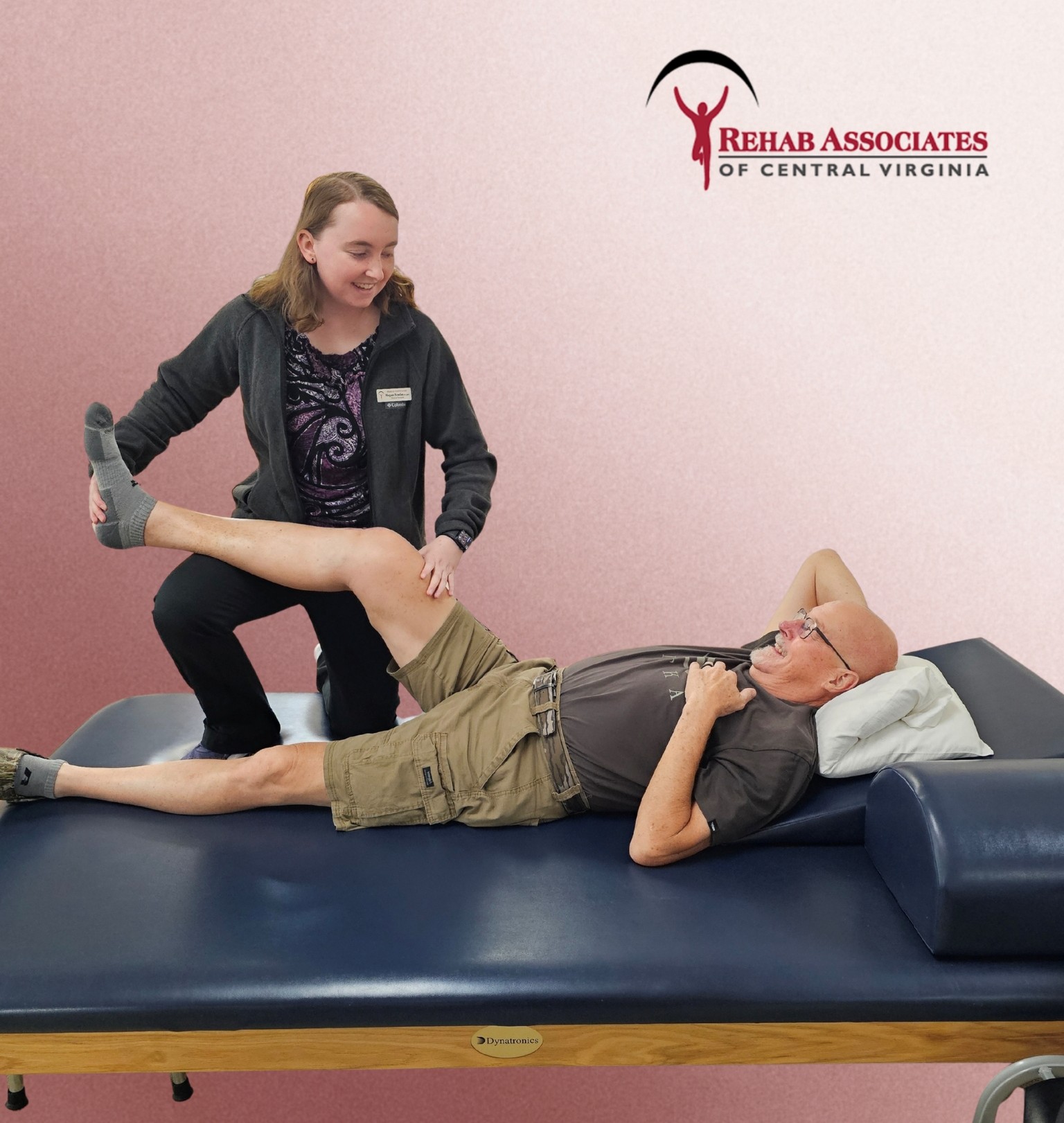
When should you come to physical therapy? It’s simple: Come before your limitations keep you from doing what you love to do. Physical therapy can help you move better, feel better and get back to those activities that matter most to you. At Rehab Associates, we don’t want you limit the activities you enjoy because movement has become uncomfortable or difficult. We don’t want you to learn to live with these problems, hoping they will eventually go away, or to rely on pain medication to carry you through the day. So, we’ve put together a list of red flags. If you can say “yes” to one or more of these, please give us a call to set up your appointment today!
Dr. Zac Melling treats patients in the Rehab Associates clinic in Hurt.
1. You’re Taking Pain Medication
If you find yourself requiring pain medication to get through the day or to manage discomfort during activities, it may be time to address the underlying problem. Physical therapy can often help reduce pain through targeted exercises, manual therapy, movement training, and other treatments. Your physical therapist can evaluate how you move and identify factors that may be contributing to your symptoms.
Physical therapy isn’t simply about treating pain. The goal is to help you understand your condition and develop the strength, mobility, and movement patterns needed to prevent the problem from continuing.
2. You’re in Pain
Pain is one of the most common reasons people seek physical therapy—and you don’t have to wait until your pain becomes severe. Whether you’re experiencing back pain, neck pain, shoulder pain, knee pain or another musculoskeletal problem, a physical therapist can evaluate your symptoms and develop an individualized treatment plan.
Sometimes pain begins after an injury. Other times, it gradually appears without an obvious cause. Either way, getting help early can prevent a small problem from becoming a bigger one.
3. You’re Recovering from Surgery
Physical therapy is an important part of recovery following many surgeries. Whether you’ve had a joint replacement, orthopedic procedure or another operation that affects your movement, your physical therapist can help you safely regain strength, flexibility, balance, and function.
Post-operative therapy can also help you progress through the different stages of recovery while following your surgeon’s precautions. Rather than guessing how much you should move or exercise, you’ll have professional guidance throughout the process.

Dr. Jessica Deloach is site director at the Rehab Associates clinic in Hurt.
4. You Have Nagging Symptoms
Maybe your shoulder has bothered you for months. Perhaps your knee hurts every time you climb stairs, or your back gets stiff whenever you sit for too long. These nagging symptoms may seem manageable, but they can gradually interfere with your life.
You don’t have to wait for symptoms to become unbearable before seeking help. A physical therapy evaluation can determine what may be contributing to your discomfort and provide strategies to improve your mobility and function.
5. You Have Balance Problems
Feeling unsteady when walking? This is not something you should simply accept as a normal part of getting older. Balance problems can increase your risk of falling and may cause you to avoid activities because you don’t feel confident on your feet.
Physical therapists can assess your balance, strength, walking pattern and ability to safely move through different environments. Treatment may include balance exercises, strengthening, gait training and strategies to improve confidence and safety.
6. Your Sleep Is Being Interrupted
Pain doesn’t always stop when the day ends. If discomfort is waking you during the night or making it difficult to find a comfortable sleeping position, physical therapy may help address the source of the problem.
Poor sleep can affect your energy, concentration and overall well-being. Treating the underlying musculoskeletal issue may help reduce symptoms so you can get back to sleeping more comfortably.
7. You Have Difficulty With Controlled Descents
Have you noticed that sitting down in a chair, going down stairs or lowering yourself from a step has become difficult? An uncontrolled or “plopping” descent can be a sign of weakness, particularly in the muscles responsible for controlling movement. Physical therapy can help you increase strength and possibly avoid an accident.
If any of these red flags feel familiar to you, please give us a call to day at 855-722-8478.
Rehab Associates is a regional outpatient physical therapy practice in Central Virginia. For more information, please visit https://racva.com/

Dr. Megan Bowles
Megan Bowles, PT, DPT, is a licensed physical therapist who earned her Doctor of Physical Therapy from the University of Lynchburg in 2026. She has a Bachelor’s degree in Exercise Physiology from the University of Lynchburg where she graduated in 2023. Megan has a special interest in general orthopedics for all ages, and she also enjoys geriatric rehabilitation including balance retraining and vestibular rehab. Megan is passionate about helping patients return to the activities they love.
Outside of the clinic, Megan enjoys reading, exercising at a local gym, farming, and spending time with family and friends.